Naralingo
Talking to Your Landlord in German: Repairs and Emails
Report heating problems, leaks and mould to your landlord in German. Get polite phrases, a repair-call script and an email template for Germany.
Greg, founder of Naralingo13 min read
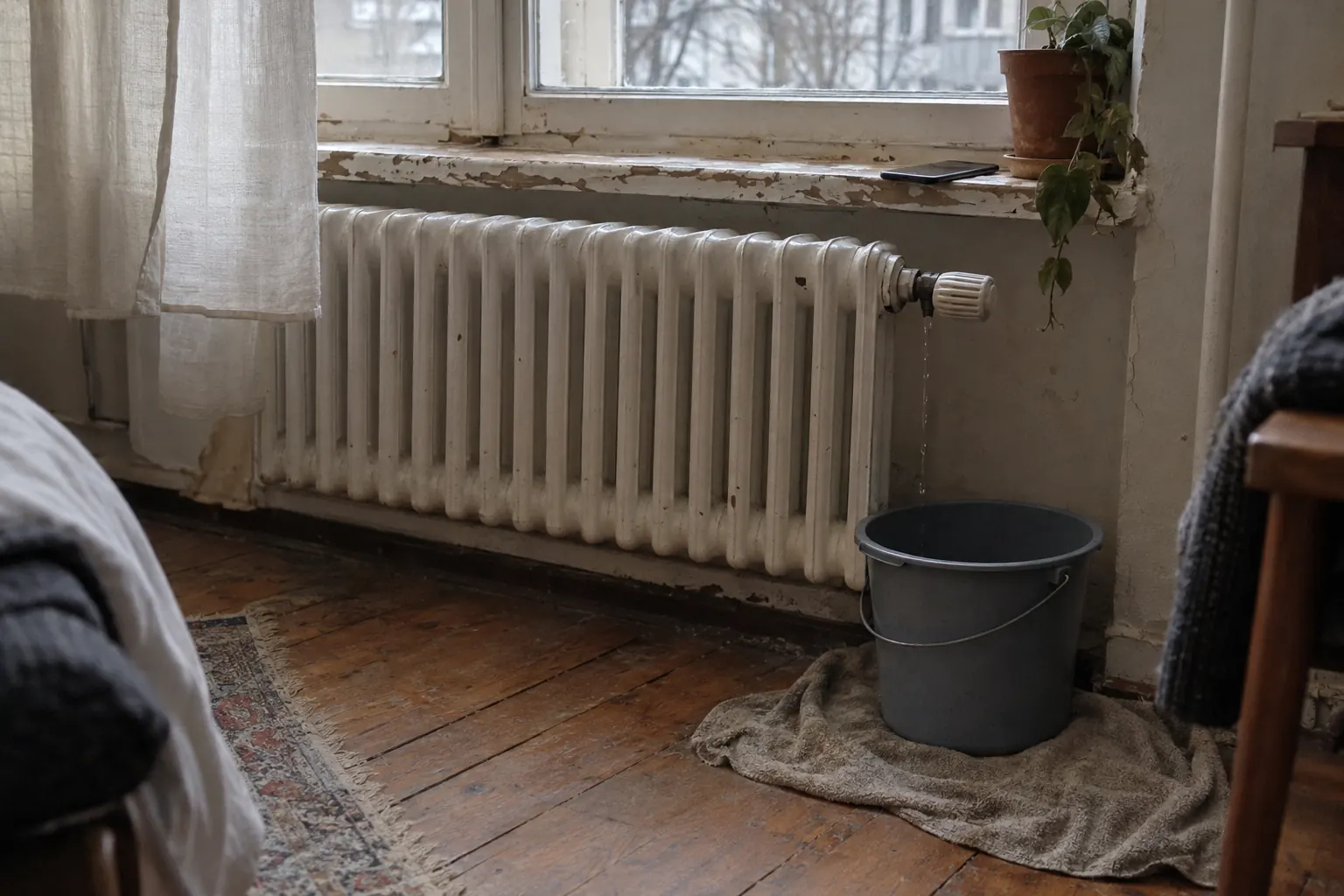
Talking to your landlord in German is easier when you know the order of the conversation: identify your flat, describe the problem, explain how urgent it is and agree on the next step. You do not need to diagnose a broken heating system or give a speech about tenancy law.
This guide gives you the language for a repair call, a follow-up email and the awkward moment when someone asks a question you did not expect. The examples use formal Sie, the safest starting point with a landlord or property management office. Replace the sample names, address and availability with your own details.
Landlord in German: who should you contact?
Der Vermieter or die Vermieterin means “landlord”. This is the person or organisation renting the property to you. Der Mieter and die Mieterin mean “tenant”.
Die Hausverwaltung means “property management”. It may be a company or an office handling matters for the landlord, including repair reports and correspondence. If your tenancy documents name a management office as your contact, start there rather than trying to reach the owner personally.
Der Hausmeister is the caretaker. A caretaker may inspect a problem, deal with building equipment or arrange access. Do not assume they can approve every repair or decide who pays for it.
Check your tenancy documents and any building noticeboard for the designated repair contact. There may be separate details for out-of-hours problems. Who handles what depends on the building’s arrangements.
Use Sie, Ihnen and Ihr unless the person offers du. In a formal email, address a named contact with Sehr geehrte Frau Schneider, or Sehr geehrter Herr Schneider,. If you do not know who will read it, Sehr geehrte Damen und Herren, is a standard formal opening.
Before you call: prepare facts, not a diagnosis
Write down your address, floor, the affected room, what you can observe and when you first noticed it. Keep your tenancy or customer reference nearby if you have one.
“The living-room radiator stays cold” is more useful than “the whole system is broken” if you have only checked one radiator. Say whether other rooms are affected and whether the problem is continuing.
Distinguish an appointment request from an urgent situation. Water actively coming through a ceiling needs prompt attention, not just an email left unread. Use the building’s emergency number if there is one. If there is immediate danger, call 112 rather than waiting for an office reply. Keep away from water near electrical fittings.
For a non-emergency, ask who will authorise the work before booking a contractor yourself. Reporting a fault, arranging access and commissioning a repair are separate steps.
Take photos where useful and safe. They help document visible damage, but a photo alone may not explain what happened. Add a short written description.
The main phrases for a repair report
Use these as building blocks rather than trying to memorise everything. One opening sentence, a clear description and a question about the next step are enough to begin. The address and times are examples.
Opening the call and checking responsibility
Opening the call and finding the right person
Guten Tag, ich rufe wegen meiner Wohnung an.
Hello, I’m calling about my flat.
Ich wohne in der Gartenstraße 12.
I live at Gartenstraße 12.
Replace the example address with your own.
Die Wohnung ist im zweiten Stock links.
The flat is on the second floor, on the left.
In Germany, the ground floor is das Erdgeschoss. Der zweite Stock is two floors above ground level.
Bin ich bei Ihnen richtig?
Are you the right person to speak to?
Sind Sie für Reparaturen zuständig?
Are you responsible for repairs?
Könnte ich bitte mit der zuständigen Person sprechen?
Could I speak to the person responsible, please?
Es geht um eine Reparatur.
It’s about a repair.
Ich spreche noch nicht so gut Deutsch.
My German isn’t very good yet.
Könnten Sie bitte etwas langsamer sprechen?
Could you speak a little more slowly, please?
Könnten Sie das bitte wiederholen?
Could you repeat that, please?
Explaining exactly what is wrong
Describing heating problems, leaks and mould
Die Heizung funktioniert nicht.
The heating isn’t working.
Die Heizkörper bleiben kalt.
The radiators stay cold.
Seit gestern gibt es kein warmes Wasser.
There has been no hot water since yesterday.
Im Badezimmer tropft Wasser von der Decke.
Water is dripping from the bathroom ceiling.
Unter dem Waschbecken läuft Wasser aus.
Water is leaking from underneath the washbasin.
An der Wand im Schlafzimmer ist Schimmel.
There is mould on the bedroom wall.
Die Wand fühlt sich feucht an.
The wall feels damp.
Das Problem besteht seit gestern Abend.
The problem has been there since yesterday evening.
Es betrifft nur das Wohnzimmer.
It only affects the living room.
Ich kann Ihnen Fotos per E-Mail schicken.
I can email you photos.
Das Wasser läuft immer noch.
The water is still leaking.
Arranging the visit and confirming the next step
Arranging access and getting written confirmation
Wann kann jemand vorbeikommen?
When can someone come round?
Könnten Sie mir bitte einen Termin vorschlagen?
Could you suggest an appointment, please?
Am Donnerstag bin ich ab vierzehn Uhr zu Hause.
On Thursday, I’ll be home from 2 p.m.
Bitte sagen Sie mir vorher Bescheid.
Please let me know beforehand.
Muss ich selbst einen Termin mit der Firma vereinbaren?
Do I need to arrange an appointment with the company myself?
Wer beauftragt die Reparatur?
Who will commission the repair?
This asks who will formally authorise or order the work, not merely who will carry it out.
Könnten Sie mir das bitte schriftlich bestätigen?
Could you confirm that in writing, please?
Haben Sie meine E-Mail erhalten?
Have you received my email?
Könnten Sie mir bitte sagen, wie es weitergeht?
Could you tell me what happens next, please?
An wen kann ich mich im Notfall wenden?
Who can I contact in an emergency?
Könnten Sie mir bitte die Vorgangsnummer nennen?
Could you give me the reference number, please?
Useful when a property management office uses a ticket or case system.
A repair call, from the first sentence to an appointment
A useful call has a simple shape: introduction, problem, questions, next step. Keep your notes in front of you. You can read your first sentence aloud; there is no need to apologise repeatedly for your German.
First, describe the heating problem
You: Guten Tag, hier spricht Alex Morgan. Ich wohne in der Gartenstraße 12, im zweiten Stock links.
Hello, this is Alex Morgan. I live at Gartenstraße 12, on the second floor, on the left.
Property manager: Was genau funktioniert nicht?
What exactly isn’t working?
You: Der Heizkörper im Wohnzimmer wird seit gestern Abend nicht mehr warm.
The living-room radiator hasn’t been getting warm since yesterday evening.
Property manager: Sind die anderen Heizkörper auch betroffen?
Are the other radiators affected too?
You: Nein, in den anderen Zimmern wird es warm.
No, the other rooms are warming up.
Property manager: Ich gebe das an die zuständige Firma weiter.
I’ll pass that on to the company responsible.
Listen for questions beginning with Seit wann …? (“Since when …?”), Wo genau …? (“Where exactly …?”) and Sind Sie …? (“Are you …?”). These usually ask for one specific detail, not a long explanation.
Notice that “I’ll pass it on” is not an appointment. Before ending the call, establish whether the contractor will contact you or whether you must contact them.
Then agree on access
Property manager: Die Firma könnte am Donnerstag zwischen neun und elf Uhr kommen.
The company could come on Thursday between nine and eleven.
You: Da bin ich leider nicht zu Hause. Wäre ein Termin am Nachmittag möglich?
Unfortunately, I won’t be home then. Would an afternoon appointment be possible?
Property manager: Ich frage bei der Firma nach.
I’ll check with the company.
You: Danke. Bitte bestätigen Sie mir den Termin per E-Mail, sobald er feststeht.
Thank you. Please confirm the appointment by email once it is definite.
Repeat important details back, especially dates, time windows and telephone numbers. If the appointment is still provisional, do not treat it as confirmed. You can follow the call with a short email summarising what you understood.
Reporting mould or water damage without guessing the cause
For Schimmel (“mould”), describe its location and what you can see: the bedroom wall, a corner beside the window or an area behind furniture. Add when you noticed it and whether the surface feels damp. Photos can help show the extent of the visible problem.
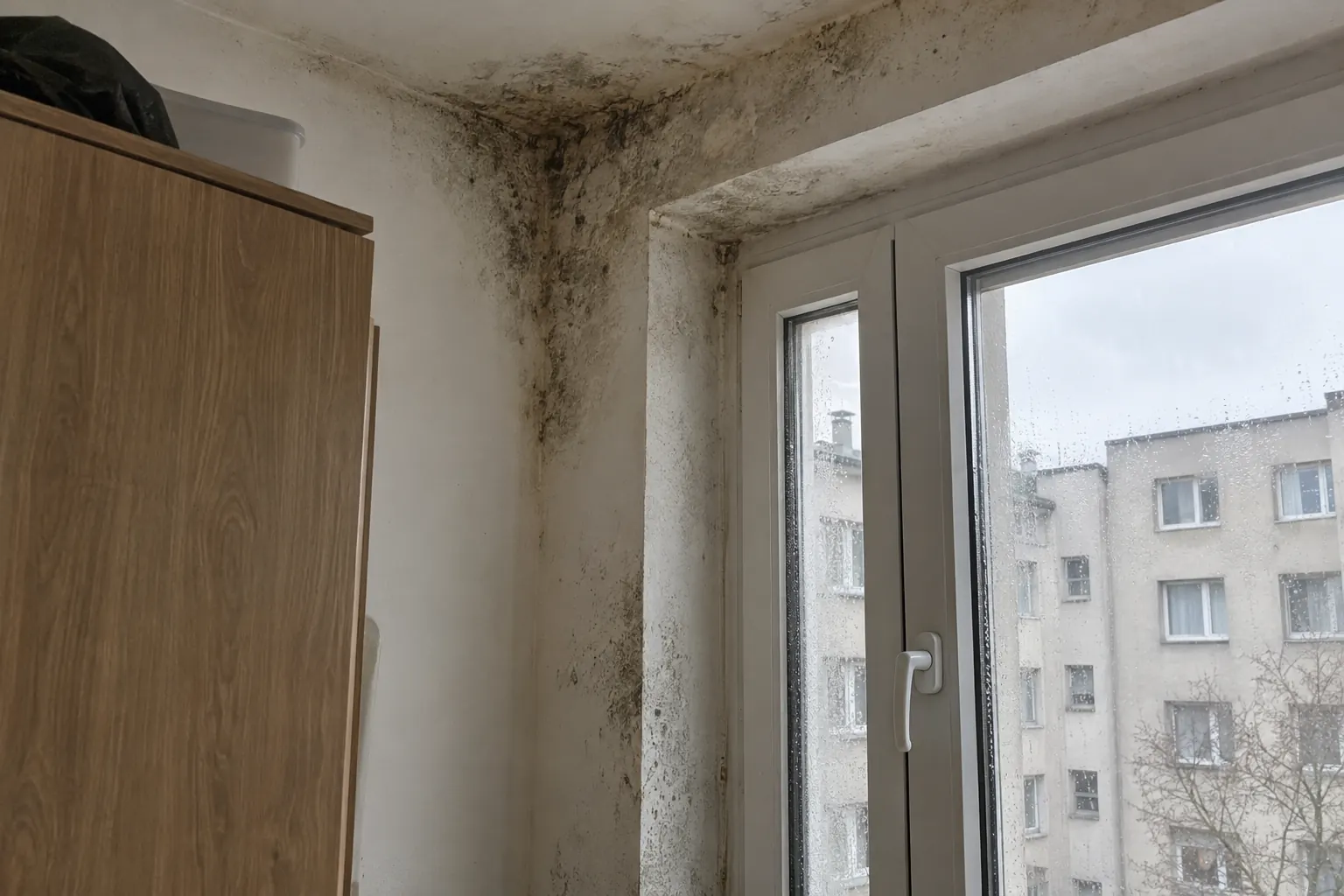
For Wasserschaden (“water damage”), distinguish between existing staining and water that is still entering the flat. That difference matters for the response. Say whether water is dripping, flowing or no longer coming through.
You do not need technical vocabulary for pipes, insulation or heating controls to make an initial report. Everyday observations are useful. Avoid presenting a guessed cause as a fact, and do not agree to an explanation you have not understood simply to finish the conversation.
If someone gives instructions you cannot follow confidently, ask for them in writing. A language misunderstanding is a good reason to pause and clarify, especially when equipment or safety is involved.
Reporting a problem in writing: an email you can adapt
A defect report is commonly called a Mängelanzeige. Tenants are generally expected to report defects promptly, and a written report creates a record of what you reported and when. It does not need complicated legal language.
For an urgent problem, make the appropriate call first and follow up in writing. For correspondence generally, use the contact channel named in your tenancy documents and keep copies. If you use registered post (Einschreiben), keep a copy of the letter as well as any delivery record.
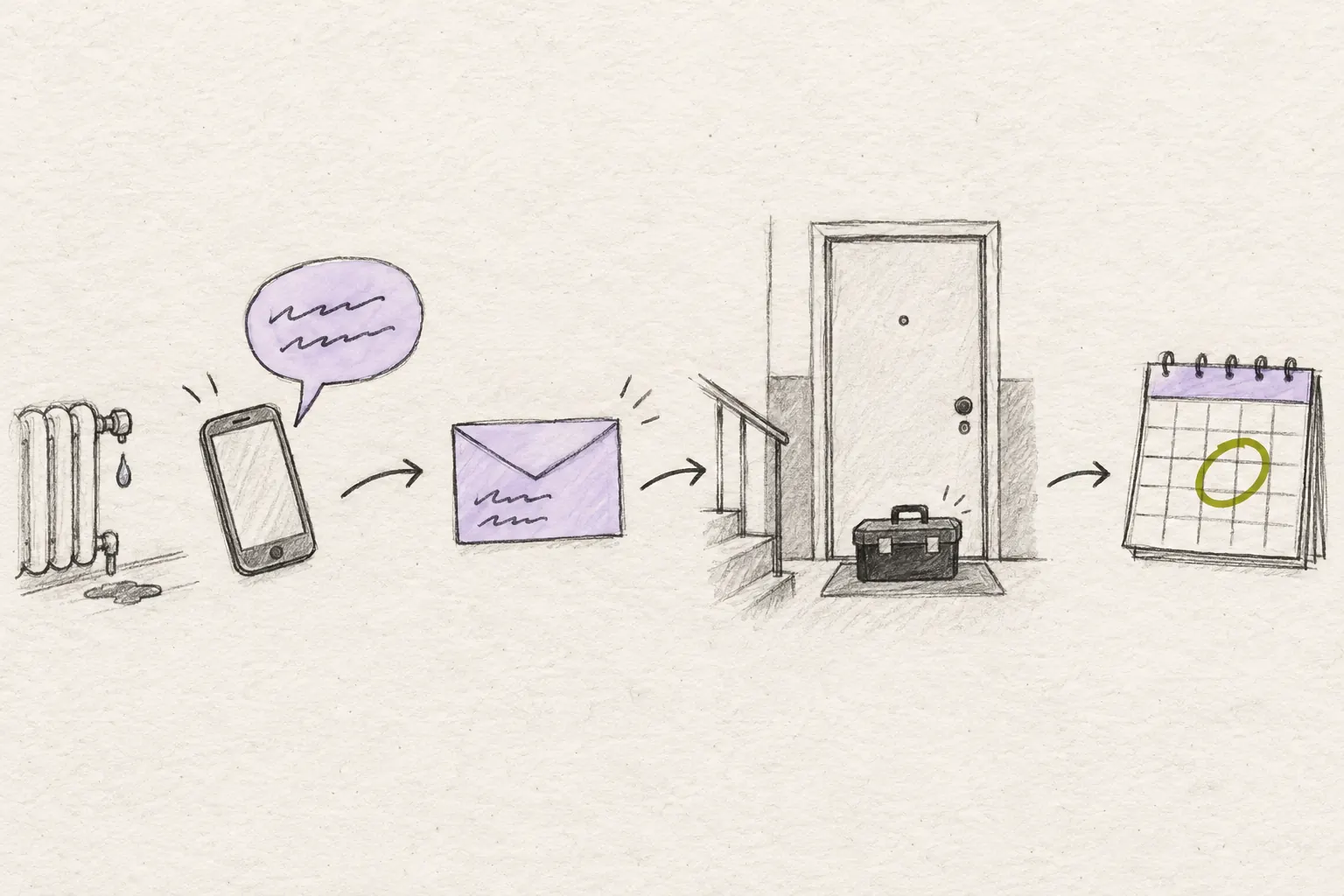
Here is a straightforward email for a radiator that is not heating up:
Betreff: Heizung ohne Funktion, Gartenstraße 12, 2. OG links
Sehr geehrte Frau Schneider,
in meiner Wohnung in der Gartenstraße 12, 2. OG links, funktioniert seit Montagabend die Heizung im Wohnzimmer nicht. Der Heizkörper bleibt kalt, obwohl das Thermostat aufgedreht ist. Die anderen Heizkörper funktionieren.
Bitte veranlassen Sie eine Überprüfung und teilen Sie mir mit, wann ein Termin möglich ist. Am Donnerstag bin ich ab 14 Uhr zu Hause. Falls ein anderer Termin nötig ist, stimmen Sie diesen bitte vorher mit mir ab.
Bitte bestätigen Sie den Eingang dieser Nachricht.
Mit freundlichen Grüßen
Alex Morgan
In English:
Subject: Heating not working, Gartenstraße 12, second floor left
Dear Ms Schneider,
The heating in the living room of my flat at Gartenstraße 12, second floor left, has not been working since Monday evening. The radiator stays cold even though the thermostat is turned up. The other radiators work.
Please arrange an inspection and let me know when an appointment is possible. I’ll be home from 2 p.m. on Thursday. If you need to come at a different time, please arrange it with me in advance.
Please confirm receipt of this message.
Kind regards,
Alex Morgan
Only include observations that are true in your case. 2. OG means zweites Obergeschoss, the second floor above ground level. Acknowledging receipt of an email is not the same as confirming a repair appointment, so keep those requests distinct.
Following up when nothing has happened
If there is no response, refer to your earlier message rather than starting the whole story again. Give its date, repeat the current problem and ask for a concrete update. How urgently you need to act depends on the defect and the circumstances; there is no single follow-up timetable that fits every repair.
You: Ich habe Ihnen wegen der Heizung geschrieben, aber bisher keine Antwort bekommen.
I wrote to you about the heating, but I haven’t received a reply yet.
Property manager: Wann haben Sie die Nachricht geschickt?
When did you send the message?
You: Am Montag. Der Heizkörper im Wohnzimmer bleibt weiterhin kalt.
On Monday. The living-room radiator is still cold.
Property manager: Ich prüfe den Vorgang und melde mich bei Ihnen.
I’ll check the case and get back to you.
Ask when you can expect an update, and note the answer. Keep a record of calls, emails, photos and agreed appointments. If you are having ongoing problems with your landlord in Germany, a clear timeline is more useful for an adviser than a folder of messages with no explanation.
German landlord responsibilities: who pays for repairs?
As a general rule, the landlord is responsible for keeping the rented property in a condition suitable for its agreed use. That does not mean every repair bill is automatically theirs, or automatically yours.
Responsibility can depend on the cause of the damage and the tenancy agreement. Some contracts contain a Kleinreparaturklausel, a small-repair clause. Its wording and validity matter; the fact that a repair seems minor does not by itself settle who pays. Check your contract and get advice if you are unsure.
Nebenkosten are service and utility charges on top of the basic rent, and the Nebenkostenabrechnung is the annual statement that settles them. A repair is not automatically your responsibility merely because you pay Nebenkosten.
If you receive a disputed bill, ask what it covers and on what basis you are being charged. For individual advice, contact a local Mieterverein, a membership-based tenants’ association, or a qualified legal adviser.
Mietminderung, rent reduction because of a defect, exists in German tenancy law, but how much (if anything) applies depends on the case. Get advice from a Mieterverein or a lawyer before paying less rent; reducing it by too much can put you in arrears. The same goes for questions about your Kaution (deposit). This guide gives you language and general background, not legal advice.
Common English-speaker mistakes
These small changes make your German clearer without making it elaborate.
- “Ich bin kalt” is not the usual way to say you feel cold. Say “Mir ist kalt.” For a repair report, “In der Wohnung ist es kalt” (“It’s cold in the flat”) gives the listener more relevant information.
- “Ich will …” can sound blunt in a request. It is grammatically correct, but “Könnten Sie bitte eine Reparatur veranlassen?” (“Could you please arrange a repair?”) is a better default with a landlord. Polite wording does not prevent you from being firm about the problem.
- Bekommen does not mean “become”. “Ich habe Ihre Nachricht bekommen” means “I received your message”. For “It’s getting colder”, use “Es wird kälter.”
- Eventuell means “possibly”, not “eventually”. “Können Sie eventuell heute jemanden schicken?” asks whether they could possibly send someone today. It does not mean they can send someone at some unspecified later point.
- A Termin is an appointment, not necessarily a deadline. “Wir brauchen einen Termin” means “We need an appointment”. Listen carefully when someone is discussing scheduling rather than the date by which work will be completed.
You can use short sentences throughout. A precise description in simple German is better than an impressive sentence that leaves the actual fault unclear.
Rehearse the answers, not just your opening line
Before calling, practise saying your address, the room, the problem and when it started. Then rehearse answers to three likely questions: Are other rooms affected? When are you home? How can the contractor reach you?
If you understand the questions but cannot get your answer out quickly, practise with the cue first and the German answer second. The guide to understanding a language but struggling to speak explains that gap in more detail.
Keep a small note beside you during the call: address, problem, since when, access, next step. Your aim is not flawless German. It is to leave both sides clear about what is wrong and what happens next.
Frequently asked questions
What is the German word for landlord: Vermieter or Hausverwaltung?
Der Vermieter or die Vermieterin means landlord. Die Hausverwaltung means property management, which may handle repairs and correspondence on the landlord’s behalf; der Hausmeister is the caretaker.
How do I report a repair to my landlord in German?
Give your address, describe what is wrong and say when it started. For example: “Die Heizung funktioniert seit gestern nicht.” Report urgent problems promptly by phone or through the designated emergency contact, then follow up in writing and keep a copy.
Should I use Sie or du with my landlord?
Use Sie unless your landlord has offered du. You can still be direct and clear: “Könnten Sie bitte eine Reparatur veranlassen?” is a polite way to ask them to arrange a repair.
How do I ask for something in writing in German?
Say “Könnten Sie mir das bitte schriftlich bestätigen?” This means “Could you confirm that in writing, please?” If you specifically want an email, use “Könnten Sie mir das bitte per E-Mail bestätigen?”
Who pays for repairs in a German rental?
As a general rule, the landlord is responsible for maintaining the rental property in a usable condition. Responsibility for a particular bill can depend on the cause of the damage and any valid small-repair clause in your contract, so seek advice if a charge is disputed.
Practise this conversation out loud
Naralingo turns your situation into a 15-minute audio lesson: you listen, repeat and answer out loud. Your first lesson is free.
Start a free lesson