Naralingo
Understand a language but can't speak it? What to do
Understand a language but can't speak it? Try a practical one-week plan, a real-life rehearsal script and phrases to use when you freeze.
Greg, founder of Naralingo9 min read
You follow your colleagues’ conversation, understand most of a video, and know what the person at the counter just asked. Then it’s your turn, and nothing comes out. If you understand a language but can't speak it, the gap is frustrating, but it does not mean your learning has been wasted. Understanding and speaking overlap; they are not the same task.
The useful next step is not simply to study harder. It is to practise retrieving a small amount of language aloud, then using it when the question or situation changes.
Why you understand a language but can't speak it
When you listen, someone else supplies the words and sentence structure. Context helps: you can recognise a familiar verb, guess a missing word and still follow the message. When you speak, you have to supply those pieces yourself.
That is the difference between recognition and recall. Recognising a word in a podcast does not necessarily mean you can retrieve it quickly at a pharmacy counter.
There are other demands, too:
- Real-time pressure: the other person is waiting, so you have less time than you do when writing.
- Unfamiliar pronunciation: you may have heard a sentence many times without ever practising saying it yourself.
- Self-monitoring: checking every ending can interrupt a sentence before you finish it.
- Fear of judgement: you may know what to say alone but struggle when someone is listening.
More listening can still help. But if you never attempt an answer before hearing or reading it, you are not practising the exact task that is difficult.
Find the part that is blocking you
Try this quick check: explain what you did yesterday for thirty seconds in your target language, without notes. Then explain the same thing again with preparation.
Notice where the difficulty sits:
- No words arrive, even alone: start with retrieving useful phrases from meaning prompts.
- Words arrive, but the sentence falls apart: rehearse short sentence patterns and change one detail at a time.
- You speak alone but freeze with people: start by recording yourself, then practise a predictable exchange with someone.
- You restart because your accent sounds wrong: work on one pronunciation feature, then allow yourself to finish without restarting.
You may recognise more than one pattern. Choose the one that most often stops you from getting your message across.
How to practise speaking a language by yourself
Solo practice works best when it includes an attempt, not just listening or reading aloud. Use these exercises with language you broadly understand.
Retrieve the sentence before checking it
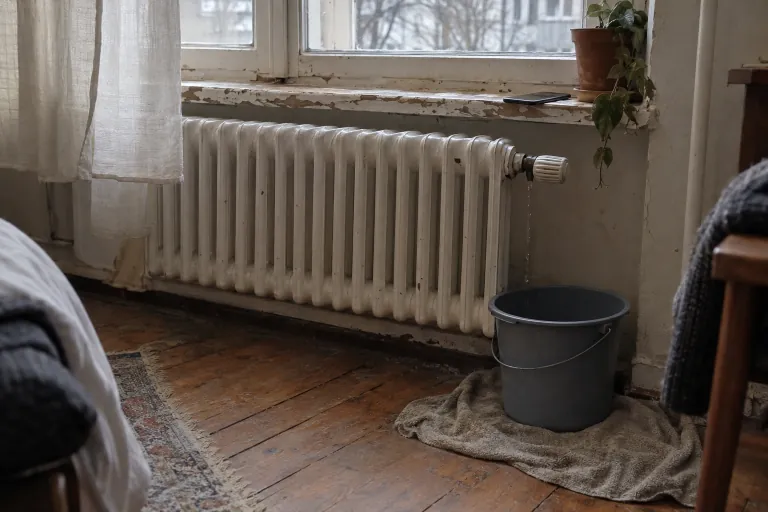
Choose one small task: reporting broken heating, ordering lunch or explaining why you need an appointment.
Write six useful sentences, checking unfamiliar wording with a reliable learning source or a proficient speaker. Beside each sentence, write a meaning prompt in English. For example:
- Prompt: “Say that you can come tomorrow.”
- German answer: “Ich kann morgen kommen.”
Cover the German, look at the prompt and say your answer aloud. Then uncover it and check. A different correct answer is fine; the model is not a password.
If nothing comes, look at the sentence, say it once, cover it and try again. Later, change tomorrow to Friday. This practises retrieving language, rather than recognising the same line repeatedly.
Use a short clip, then remove the support
Choose one clear sentence from a recording with an accurate transcript. A clip of roughly five to ten seconds is enough.
- Listen for the meaning.
- Read the transcript and check anything unclear.
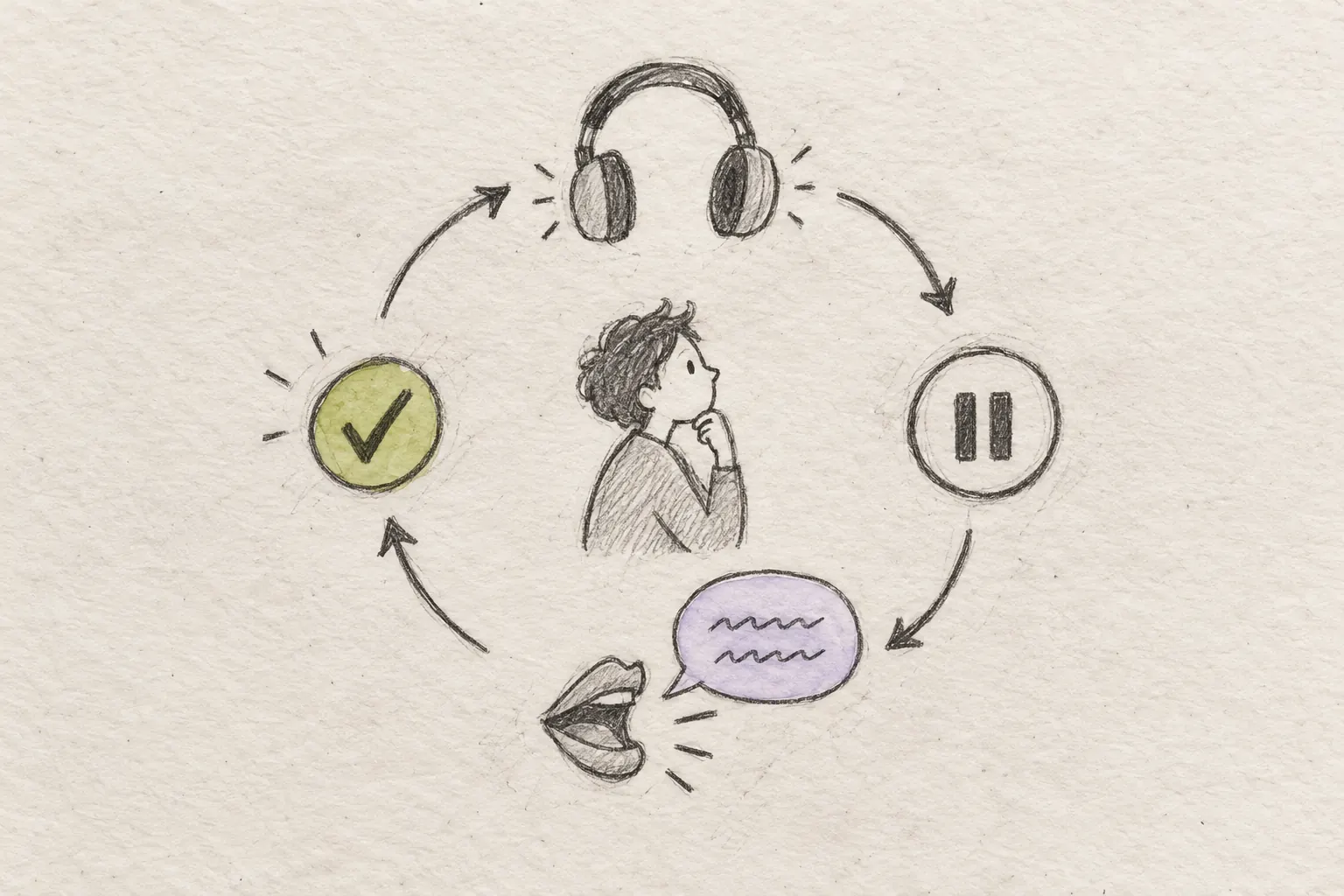
- Play the sentence, pause and repeat it aloud.
- Once comfortable, try shadowing: speak just behind the voice, following its rhythm.
- Hide the transcript and say the sentence again.
- Use the same pattern with one different detail.
Copy manageable chunks, not an entire fast conversation. If you cannot tell where the words begin and end, choose something easier. Shadowing helps you rehearse sounds and rhythm; changing the sentence adds a small speaking task of your own.
Answer audio prompts without a screen
Make a simple practice recording on your phone: an English cue, a pause of several seconds, then a checked model answer in your target language.
During playback, answer in the pause before the model. If the pause is too short, stop playback and finish. Begin with something brief, such as “Say when you are available”, rather than “Explain your whole problem”.
On the next attempt, mix up the order. Otherwise, you may learn the sequence rather than learn to respond to the cue.
Record one attempt, not twenty perfect takes
Record yourself speaking for thirty to sixty seconds about your chosen situation. Listen once and select one issue: a missing word, a sentence you abandoned or a sound that made a word unclear.
Check that issue, then record again. Keep the first attempt so you can compare later. Recording alone cannot reliably tell you whether every sentence is correct, so seek feedback on recurring uncertainties when possible.
Do not correct everything at once. You need practice finishing a message as well as practice improving it.
Rehearse a real exchange, including the other person’s lines
A prepared speech can collapse at the first unexpected question. Write a short exchange instead, with six to eight turns and one likely follow-up.
Here is a rehearsal for calling a landlord about heating in Germany. It uses formal Sie. These are practice lines, not a prediction of what a landlord will say.
| Speaker | German | English |
|---|---|---|
| You | “Guten Tag, hier ist Alex Taylor. Die Heizung funktioniert nicht.” | Hello, this is Alex Taylor. The heating isn’t working. |
| Landlord | “Seit wann besteht das Problem?” | How long has this been happening? |
| You | “Seit gestern Abend. In der Wohnung ist es kalt.” | Since yesterday evening. It’s cold in the flat. |
| Landlord | “Sind alle Heizkörper betroffen?” | Are all the radiators affected? |
| You | “Ja, alle Heizkörper sind kalt.” | Yes, all the radiators are cold. |
| Landlord | “Wann sind Sie zu Hause?” | When are you at home? |
| You | “Morgen bin ich ab neun Uhr zu Hause. Können Sie jemanden vorbeischicken?” | I’ll be home from nine tomorrow. Can you send someone round? |
| Landlord | “Ich prüfe, wann jemand kommen kann.” | I’ll check when someone can come. |
Practise both roles, then cover your lines. Change when the problem started or which radiators are affected. Finally, answer the questions in a different order.
For more wording for this situation, use the guide to calling your landlord in German.
Prepare phrases for when you freeze
You do not need to hide every pause. You need a way to keep the exchange open while you recover.
Choose two repair phrases in your target language and practise them until you can retrieve them without reading. For example:
| Language | Phrase | English |
|---|---|---|
| German | “Können Sie das bitte wiederholen?” | Could you repeat that, please? |
| Spanish | “Necesito un momento para pensar.” | I need a moment to think. |
| French | “Pouvez-vous parler un peu plus lentement ?” | Could you speak a little more slowly? |
| Japanese | “もう一度お願いします。” | Could you say that again, please? |
After the repair phrase, give a shorter answer. If the explanation you planned will not come, state the essential fact first: the heating is broken; you are available tomorrow; you need an appointment.
Rehearse this recovery deliberately. Ask yourself an unfamiliar question, pause, use your repair phrase and answer simply. Recovering is part of speaking, not evidence that you have failed.
Four English-speaker habits worth correcting
English sentence patterns sometimes follow you into another language. Fix a few relevant patterns rather than reviewing every grammar rule before speaking.
German: keeping English word order after a time expression. Say “Morgen rufe ich an.” (“I’ll call tomorrow.”) When morgen comes first here, the conjugated verb rufe comes second, followed by ich. Practise the whole pattern with different days.
Spanish: treating “like” as a direct word-for-word substitution. Say “Me gusta este piso.” (“I like this flat.”) In this pattern, the flat is what pleases you. One flat takes gusta; several flats take gustan.
French: using “be” to give your age. Say “J’ai trente ans.” (“I’m thirty.”) French uses avoir, meaning “to have”, for age. Rehearse the complete phrase with your own age rather than translating each English word.
Italian: carrying over “for” from “look for”. Say “Cerco un appartamento.” (“I’m looking for a flat.”) In this sense, cercare takes a direct object, without a preposition.
Use a correction in a sentence you actually need. Recognising the rule is not the same as being able to use it mid-conversation.
A one-week plan to start speaking
Aim for ten to fifteen minutes a day. This is a practice schedule, not a promise that your speaking block will disappear in a week. Stay with one situation so you can spend less effort finding new vocabulary.
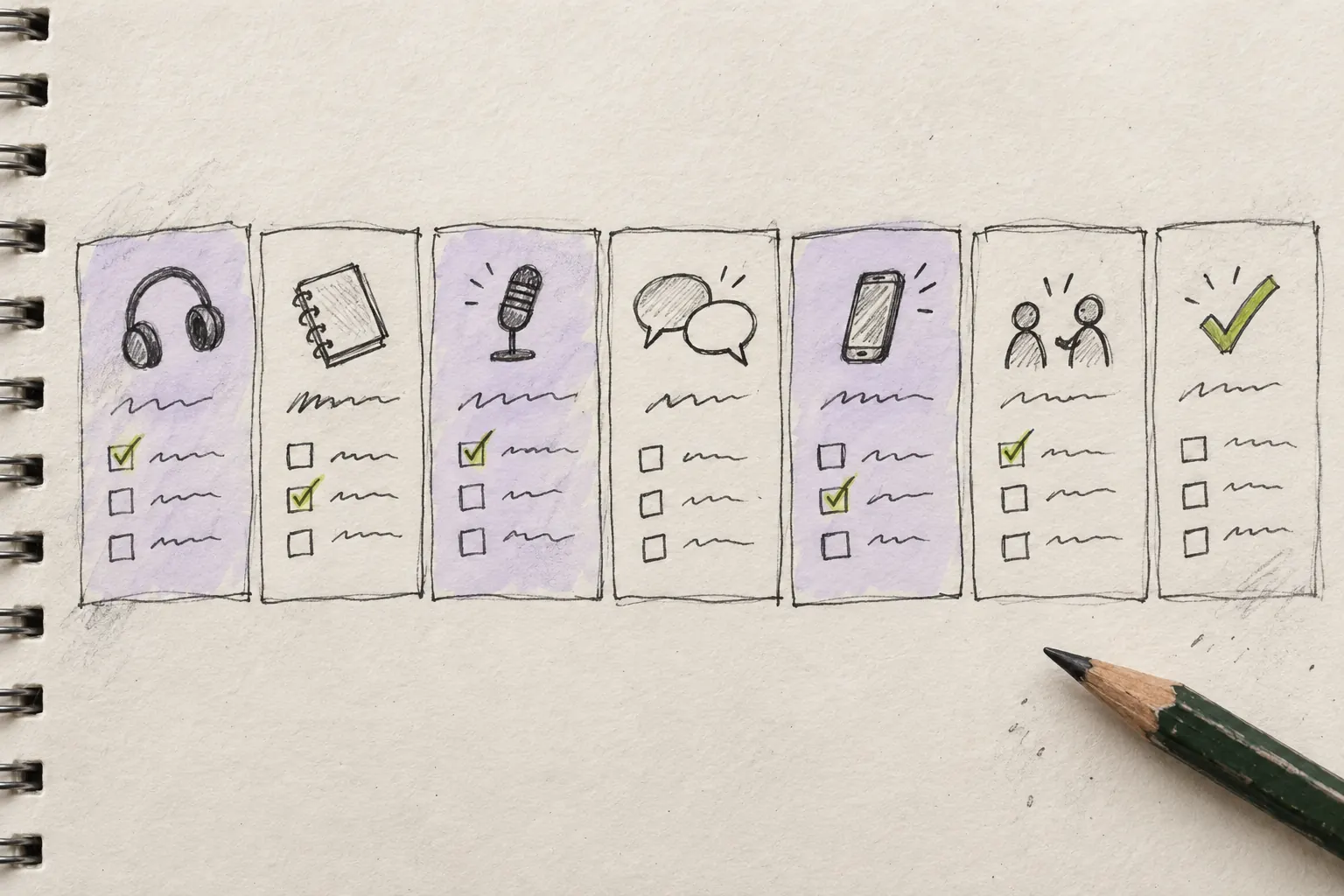
Day 1: Set a baseline
Record thirty seconds about the situation without notes. Then prepare six useful sentences and two repair phrases. Keep the recording; do not grade your accent.
Day 2: Make the sentences speakable
Use one short recording for listen-and-repeat and shadowing. Say your prepared sentences aloud. Split any difficult sentence into smaller chunks, then join them again.
Day 3: Retrieve, then vary
Cover your sentences and answer their English meaning prompts. Change one detail in each: the time, place, item or reason. Check that the changed sentence still works.
Day 4: Rehearse the exchange
Build a six-to-eight-turn dialogue. Practise both roles, then answer only the other person’s questions without looking at your lines. Add one question you did not originally prepare.
Day 5: Practise recovering
Use audio cues with pauses. When you get stuck, use a repair phrase and give a shorter answer. Finish the exchange instead of starting again from the beginning.
Day 6: Try a low-stakes interaction
Ask a patient friend or language partner to play the other role. Alternatively, try one appropriate real-world exchange. Set a small goal, such as asking a question and checking one detail, not sustaining a long conversation.
Day 7: Compare and adjust
Repeat your first recording task without reading. Notice whether you can begin more easily, finish more sentences or recover after a pause. Choose the next situation based on what you actually need to do.
If private practice goes well but live conversation remains difficult, repeat the partner stage with manageable variations. Increasing difficulty is useful only if you still get a chance to speak.
When you want guided audio practice
In Naralingo, you describe your situation or make a short recording, then receive an audio lesson of about fifteen minutes with cues in your language and pauses to answer aloud. The first lesson is free, with no credit card needed.
Frequently asked questions
Why can I understand a language but not speak it?
Understanding lets you use context and recognise language someone else has already organised. Speaking requires you to retrieve words, build sentences and pronounce them yourself, often under time pressure. Listening remains useful, but you also need practice producing answers.
What is it called when you can understand a language but not speak it?
In language learning, this is often described as a gap between receptive and productive skills. “Receptive bilingualism” is also used for understanding a language while having limited ability to speak it, including in family or heritage-language settings.
How do I practise speaking a language by myself?
Choose a real situation, prepare a few useful sentences and practise saying them from meaning prompts rather than reading them. Record a short attempt, check one recurring problem and repeat with a different detail or follow-up question.
Why do I freeze when I have to speak?
You may be trying to find words, organise a sentence and check for mistakes at the same time, while worrying about the listener’s reaction. Prepare a phrase for buying time, then practise short answers under gentle, manageable pressure.
How can I get over the fear of speaking a foreign language?
Build up from private rehearsal to a low-stakes exchange with a patient person. Give yourself a small task, such as asking one question and understanding the answer, rather than trying to sound fluent. Fear may not disappear immediately, but you can practise speaking while some nervousness is still there.
Practise this conversation out loud
Naralingo turns your situation into a 15-minute audio lesson: you listen, repeat and answer out loud. Your first lesson is free.
Start a free lesson